Protecting More Than Your Rooftop: Manage Grease Spills Around Dumpster Corrals and Drive-Thru Lanes
Why Ground-Level Grease Containment Matters
When commercial kitchen operators think about grease management, rooftop exhaust systems are often the first priority. While rooftop grease containment plays an important role in protecting commercial properties, grease-related problems don't stop at the roof.
Dumpster corrals, waste collection areas, loading zones, and drive-thru lanes can also experience grease spills, oil leaks, and buildup that create safety, maintenance, and environmental concerns.
In busy commercial environments, grease and oil can accumulate from several sources. Leaking waste containers, improperly disposed cooking oil, overflowing grease collection bins, and vehicle fluid leaks can all contribute to contamination on paved surfaces.
Over time, even small spills can become significant maintenance challenges.
Grease that escapes from waste containers or service areas can spread across concrete and asphalt surfaces, creating slippery conditions, unpleasant odors, and difficult cleanup situations. Without proper containment, these spills can also be carried by rainwater into nearby storm drains.
Taking a proactive approach to ground-level grease management helps protect employees, customers, property, and the surrounding environment.
Where Ground-Level Grease Problems Commonly Occur
Certain areas around commercial kitchens and foodservice facilities are especially vulnerable to grease and oil contamination.
Dumpster Corrals and Waste Collection Areas
Dumpster corrals are among the most common locations for grease accumulation outside commercial kitchens.
Food waste, leaking trash bags, improperly sealed containers, and grease collection bins can allow fats, oils, and grease (FOG) to escape onto surrounding pavement.
Because these areas are frequently used by employees, waste collection providers, and delivery personnel, spills can spread beyond the original source.
Without proper containment, grease buildup can lead to persistent staining, unpleasant odors, and increased cleaning requirements.
Drive-Thru Lanes
Drive-thru lanes experience continuous vehicle traffic, making them vulnerable to oil and other automotive fluid leaks.
In addition to vehicle-related contamination, foodservice operations may experience spills from waste handling or nearby service activities.
When liquids accumulate on pavement, passing vehicles can spread the contamination across larger areas, making cleanup more difficult.
A proactive containment strategy helps address these problems before they spread throughout high-traffic areas.
Loading Docks and Service Areas
Loading docks and back-of-house service areas are another potential source of grease and oil contamination.
Frequent deliveries, waste removal, equipment servicing, and daily operational activities can introduce liquids onto paved surfaces.
These areas may also be exposed to rainfall, increasing the possibility that accumulated grease or oil will be transported toward nearby drainage systems.
Identifying these vulnerable locations is an important first step in developing a comprehensive grease management plan.
Common Challenges of Uncontrolled Grease Spills
Grease accumulation around commercial facilities can create several ongoing problems.
Slip-and-Fall Hazards: Grease and oil create slippery surfaces that increase the risk of accidents for employees, delivery drivers, waste collection personnel, and customers. In high-traffic areas, even a relatively small spill can create an unsafe condition.
Surface Damage: Repeated exposure to grease and petroleum-based liquids can stain paved surfaces. Certain oils and petroleum products can also contribute to the deterioration of asphalt, potentially increasing long-term maintenance and repair costs.
Unpleasant Odors and Pest Activity: Accumulated food grease and waste residues can contribute to unpleasant odors and attract pests, particularly around dumpsters and waste collection areas.
Environmental Concerns: Rainwater can carry grease and oil from paved surfaces into storm drains. Unlike sanitary sewer systems, many stormwater systems discharge to nearby waterways without passing through a conventional wastewater treatment facility.
Increased Maintenance Costs: Repeated cleanup, degreasing, and pavement maintenance can require additional labor, cleaning products, and operational resources.
Addressing grease spills early can help reduce these challenges while supporting a cleaner, more professional commercial environment.
The Environmental Impact of Grease and Oil Runoff
One of the most important reasons to manage ground-level grease is its potential impact on stormwater quality.
When rain falls on paved commercial properties, it can pick up pollutants already present on the surface. Grease, cooking oil, petroleum-based liquids, and other contaminants may be transported toward storm drains and surrounding drainage areas.
This is particularly concerning around dumpster corrals and outdoor waste collection areas, where spills may go unnoticed between scheduled cleanings.
Once pollutants enter stormwater drainage systems, they can contribute to water quality problems in nearby streams, rivers, and other waterways.
Commercial property owners and facility managers should also be aware that local stormwater regulations and municipal ordinances may establish requirements for preventing unauthorized discharges and managing outdoor waste areas.
Preventing grease and oil from spreading is generally more effective than attempting to remove contamination after it has reached a drainage system.
Ground-level containment can be one component of a broader stormwater pollution prevention strategy, alongside proper waste storage, spill response procedures, and routine inspections.
Why Pressure Washing Alone Isn't Enough
Pressure washing is commonly used to maintain commercial pavement, dumpster corrals, and service areas. While it can help remove accumulated dirt and residue, it should not be the only strategy for managing grease and oil spills.
Without proper wastewater collection and disposal, pressure washing can move grease and other contaminants across pavement or into nearby storm drains.
Repeated cleaning also addresses the contamination after it has occurred rather than preventing it from spreading in the first place.
A more proactive approach combines routine cleaning with containment solutions designed to capture grease and oil near their source.
This helps reduce the area affected by spills and can make ongoing maintenance more manageable.
Why Ground-Level Grease Containment Is Important
Effective grease management starts with capturing spills before they spread.
Rather than relying solely on reactive cleanup, commercial facilities can incorporate dedicated containment solutions into their preventative maintenance programs.
A properly selected containment system can help:
- Capture grease and oil before they spread across paved surfaces.
- Reduce the extent of slippery contamination in high-traffic areas.
- Minimize staining and the potential for costly surface repairs.
- Limit the possibility of grease and oil reaching stormwater drainage systems.
- Simplify routine cleanup and maintenance.
- Support a cleaner appearance around waste collection and service areas.
For facilities with multiple locations, establishing consistent grease management practices can also help standardize maintenance expectations across properties.
Introducing Lane Guard™: Protection Where It Matters
Omni Containment Systems developed Lane Guard™ to address grease and oil contamination in areas that traditional rooftop containment systems don't protect.
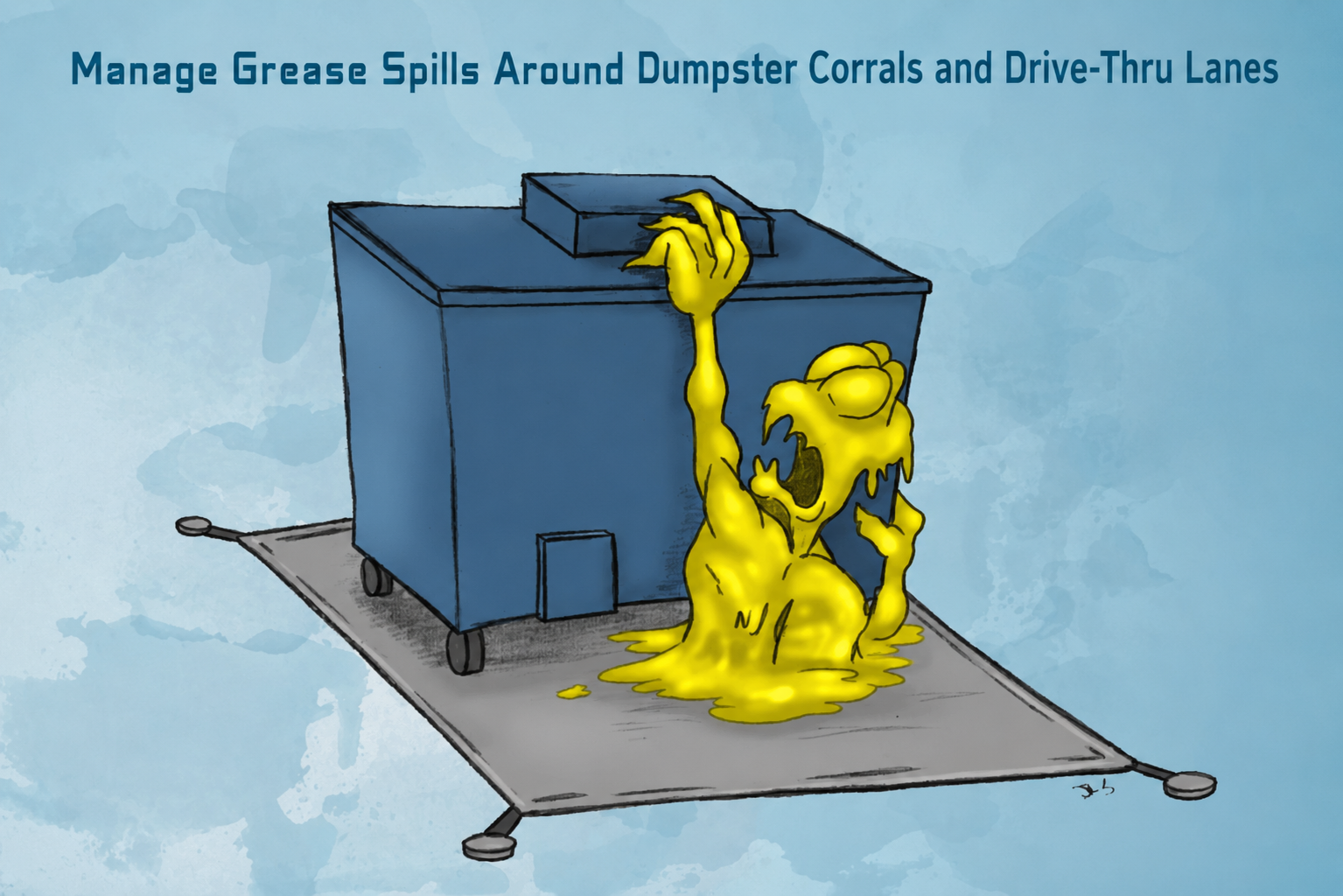
Designed for dumpster corrals, drive-thru lanes, and other vulnerable paved surfaces, Lane Guard provides an additional layer of protection where grease and oil spills are likely to occur.
Its low-profile design incorporates a replaceable hydrophobic absorbent center designed to capture petroleum- and fat-based liquids.
With a containment capacity of up to five gallons, Lane Guard helps capture spills before they spread into larger areas and create additional maintenance or environmental concerns.
Key Benefits of Lane Guard™
Targeted Ground-Level Protection
Lane Guard can be positioned in appropriate areas where grease and oil spills are likely to occur, helping facilities address contamination at vulnerable locations.
Hydrophobic Absorbent Technology
Its hydrophobic absorbent center is designed to capture oil- and grease-based liquids while resisting water absorption. This makes the technology particularly useful in outdoor environments where rainfall may be present.
Replaceable Absorbent Center
The replaceable center allows maintenance personnel to service the containment system as needed, supporting ongoing use without necessarily replacing the entire unit.
Low-Profile Design
Lane Guard's low-profile configuration offers a practical approach to ground-level containment in suitable commercial service environments.
Additional Environmental Protection
By helping capture grease and oil before they spread, Lane Guard can support broader efforts to minimize pollutant runoff from commercial properties.
Lane Guard is not a substitute for proper waste handling, spill cleanup, or stormwater compliance procedures. Instead, it serves as an additional preventative measure within a comprehensive facility maintenance program.
Building a More Complete Grease Management Strategy
Commercial grease management should address every location where fats, oils, and grease may accumulate.
For foodservice operators, this means looking beyond the kitchen exhaust system and evaluating outdoor areas that may be overlooked during routine maintenance.
A comprehensive approach includes:
- Rooftop Grease Containment: Capture grease discharged from commercial kitchen exhaust fans to help protect roofing materials and surrounding surfaces.
- Proper Waste Oil Storage: Maintain grease collection containers and ensure used cooking oil is stored and handled appropriately.
- Ground-Level Spill Containment: Identify vulnerable areas around dumpster corrals, drive-thru lanes, and service locations where additional containment may be beneficial.
- Routine Inspections: Check outdoor service areas for leaks, staining, damaged containers, and saturated absorbent materials.
- Employee Awareness: Train personnel to recognize spills, report problems, and follow established cleanup procedures.
For multi-location restaurants, convenience stores, and commercial property management companies, these preventative measures can help create more consistent maintenance practices across facilities.
The goal is simple: manage grease where it originates rather than waiting until it becomes a larger problem.
A Cleaner Approach to Commercial Facility Maintenance
Grease management should extend beyond the kitchen and rooftop.
Addressing spills around dumpsters, service areas, and drive-thru lanes helps create a safer, cleaner environment while reducing preventable maintenance challenges.
It also supports a broader commitment to responsible facility operations and environmental stewardship.
By incorporating ground-level containment into an overall grease management strategy, facility managers can take a more comprehensive approach to protecting their properties.
Whether managing a single restaurant or overseeing multiple commercial locations, preventative grease containment is an investment in long-term property maintenance.
Protect Your Property from the Ground Up
Omni Containment Systems offers innovative grease containment solutions designed to address real-world challenges in commercial environments.
From rooftop exhaust systems to ground-level spill-prone areas, effective grease management requires the right solution in the right location.
Lane Guard™ helps extend grease containment beyond the rooftop, providing another tool for commercial property owners and facility managers working to reduce contamination around dumpster corrals, drive-thru lanes, and service areas.
Don't wait for a small grease spill to become a larger maintenance concern.
Contact
Omni Containment Systems today to learn more about Lane Guard™ and discover how a comprehensive grease containment strategy can help protect your property from the ground up.
Share This Blog Post!