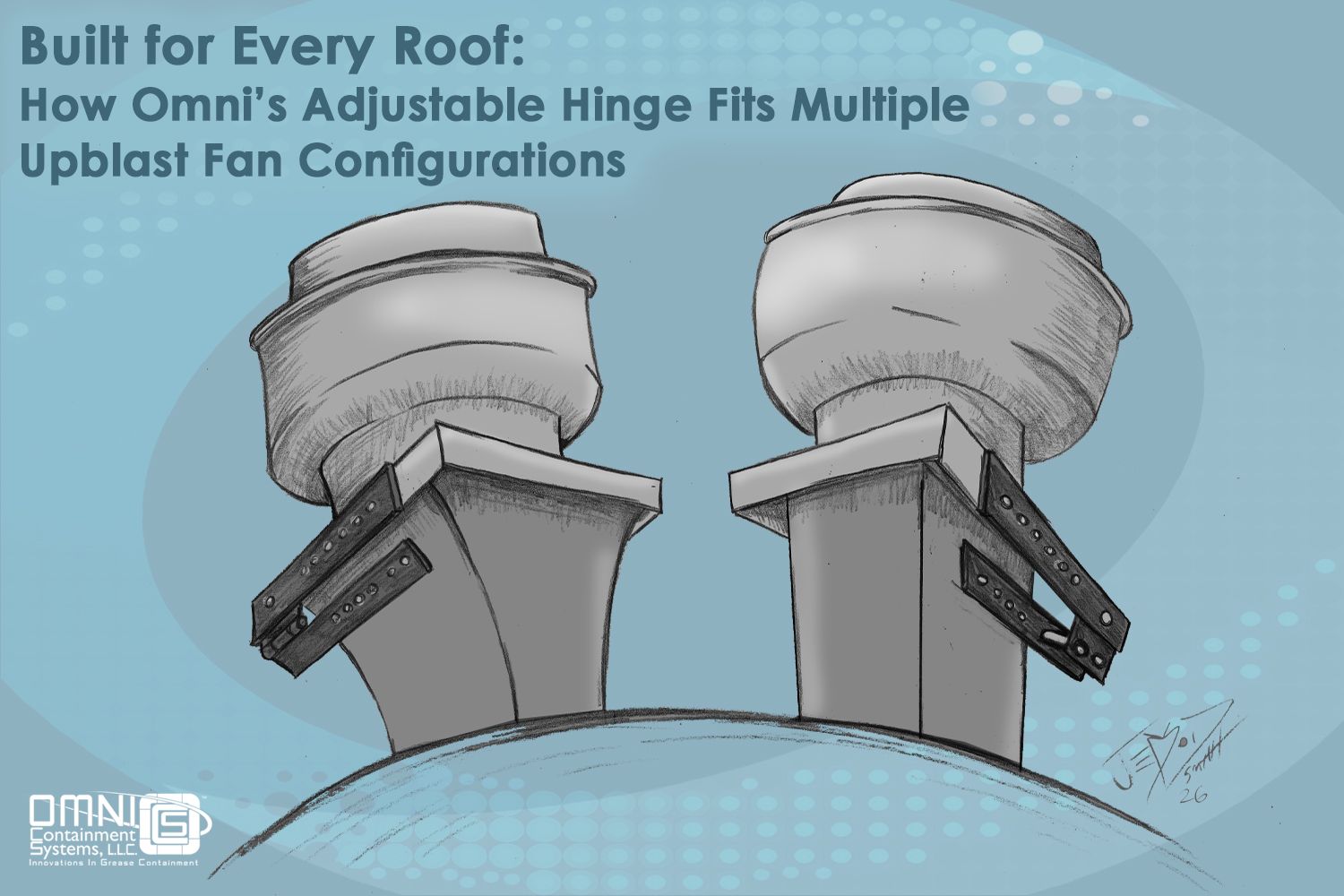
Built for Every Roof: How Omni’s Adjustable Hinge Fits Multiple Upblast Fan Configurations
Commercial kitchen exhaust systems come in all shapes and sizes, and the rooftop exhaust fans that power them are no exception. Different manufacturers, fan sizes, curb configurations, and installation conditions can make servicing rooftop equipment challenging.
That’s why the
hinge supporting an upblast fan shouldn’t be an afterthought.
A properly designed exhaust fan hinge system allows technicians to safely open the fan to gain access to the fan blades, ductwork, and surrounding components during kitchen exhaust cleaning and maintenance. But when every rooftop presents a different configuration, contractors need a hinge solution that can adapt.
Omni Containment Systems’
adjustable hinging solutions are designed with that real-world challenge in mind, providing versatility for a wide range of upblast fan configurations.
Why Proper Exhaust Fan Hinging Matters
Rooftop exhaust fans play a critical role in commercial kitchen ventilation. As the fan operates, it pulls grease-laden vapors, smoke, heat, and other cooking effluent through the hood and ductwork and out of the building.
That also means grease accumulates throughout the exhaust system, including inside and around the rooftop fan.
During kitchen exhaust cleaning, technicians need access beneath the fan to properly inspect and clean the ductwork and fan components. Without an
appropriate hinge system, gaining access can be more difficult and can put unnecessary stress on the fan and surrounding components.
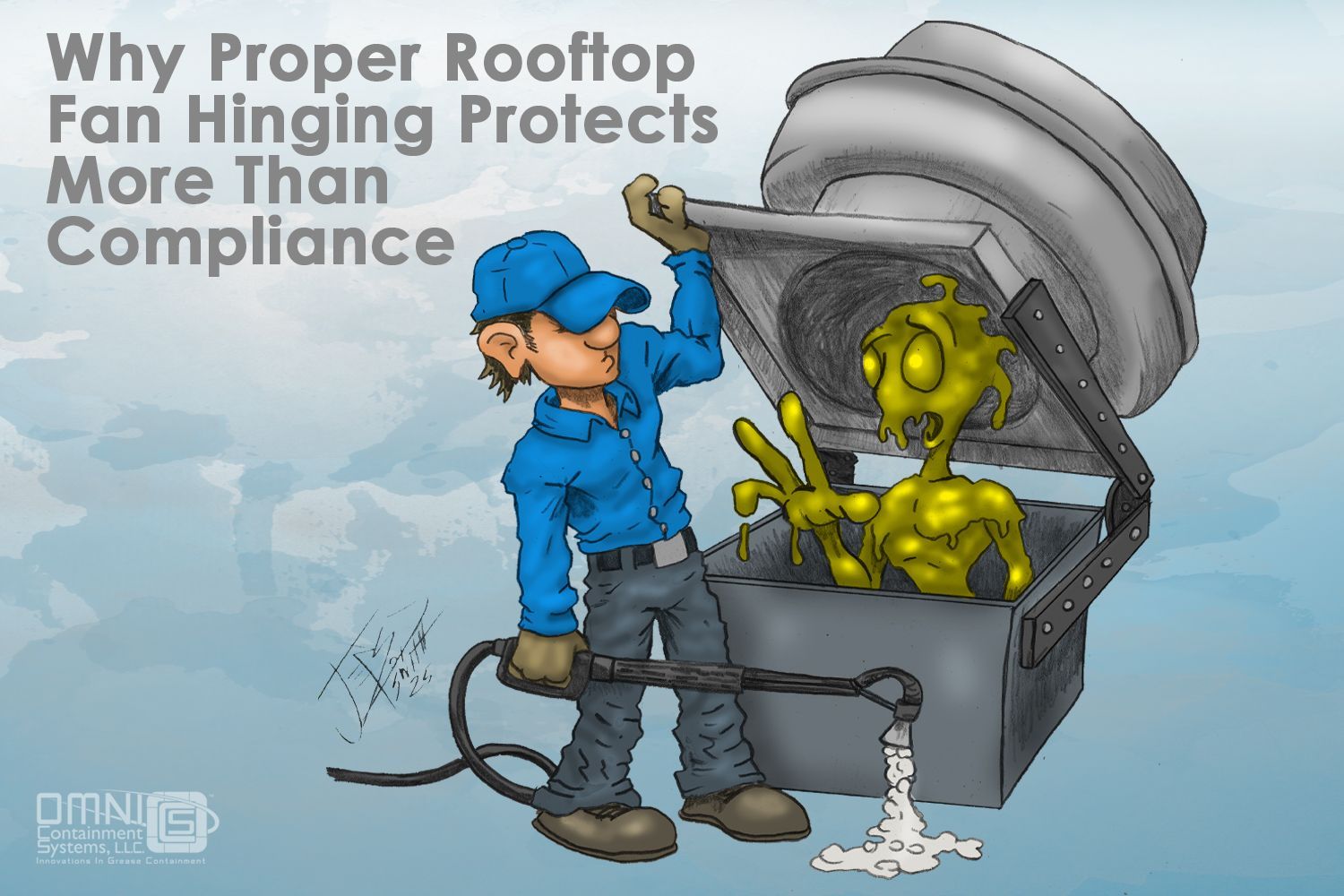
A properly installed hinge helps make servicing the system easier by allowing the fan to tilt away from the duct opening while remaining supported.
The Problem: Not Every Upblast Fan Is the Same
Walk across enough commercial rooftops and you’ll quickly discover that there’s no single standard exhaust fan configuration.
Technicians may encounter differences in:
- Fan manufacturers
- Fan base dimensions
- Curb sizes
- Fan heights and weights
- Rooftop layouts
- Existing grease containment equipment
- Electrical and utility configurations
- Retrofit versus new installations
A hinge that works perfectly on one exhaust fan may not be an ideal fit for the next.
This creates a challenge for kitchen exhaust cleaning contractors, installers, and facility maintenance teams. Carrying multiple specialized hinge kits for different fan configurations adds complexity, while trying to make a poorly matched hinge work can create additional installation and maintenance problems.
Adaptability becomes the advantage.
How an Adjustable Hinge Simplifies Installation
An adaptable hinge system gives installers greater flexibility when working with different upblast exhaust fan configurations.
Instead of approaching every fan as a completely different installation, an adjustable design can accommodate variations encountered in the field. That can mean fewer headaches for installers and more practical solutions for companies servicing multiple restaurant brands, properties, and facilities.
Better Access Means Better Kitchen Exhaust Cleaning
A hinge isn’t only about making it easier to lift an exhaust fan. It’s about what technicians can access once the fan is opened.
Properly hinged fans provide better access to areas where grease can accumulate, including:
- Fan blades
- Fan housing
- The underside of the fan
- The top of the exhaust duct
- The fan curb and surrounding areas
Improved access allows kitchen exhaust cleaning professionals to more thoroughly inspect and
clean the system. The right hinge will also help reduce the risk of injury to service personnel during installation, routine servicing, and cleaning. Instead of wrestling with the fan or working around limited access, technicians can concentrate on what they’re there to do: remove grease and properly service the exhaust system.
Protecting the Exhaust Fan During Maintenance
Commercial rooftop exhaust fans represent a significant investment, and improper handling during cleaning can place unnecessary stress on the equipment.
Simply lifting or repositioning an unhinged fan can potentially put strain on components connected to the unit. A properly designed hinge system provides a controlled pivot point that supports the fan while it is open for service.
This can help reduce unnecessary movement and make repeated maintenance more manageable.
Considering that commercial kitchen exhaust systems require ongoing inspection and cleaning, those benefits aren’t limited to a single service visit. The hinge becomes part of the long-term serviceability of the exhaust system.
Adaptability Is Especially Import for Retrofit Projects
New construction gives installers the advantage of planning components together from the beginning. Existing restaurants are a different story.
A retrofit project may involve an older exhaust fan, an unusual curb configuration, limited rooftop space, or equipment that has been modified over the years. That’s where an
adaptable exhaust fan hinge can be especially valuable.
Rather than requiring a highly specific solution for every existing configuration, an adjustable system provides installers with greater flexibility to work with the equipment already on the roof.
Hinging and NFPA 96
Accessibility is an important consideration in kitchen exhaust system maintenance. NFPA 96 includes requirements related to access and the ability to properly inspect and clean exhaust system components.
A hinge system can play an important role in providing access to the rooftop fan and ductwork during required cleaning and inspection.
However, hinging should always be considered as part of the complete exhaust system, not as a standalone compliance solution. Installation, fan clearances, electrical connections, grease containment, and other components all need to be evaluated based on the specific application and applicable requirements.
The objective is straightforward: make the system accessible so it can be properly inspected, cleaned, and maintained.
One Small Component That Makes a Big Difference
When people think about commercial kitchen exhaust systems, hoods, ductwork, and fans usually receive most of the attention. The hinge is considerable smaller, but the impact on serviceability can be significant.
The right exhaust fan hinge can provide:
- Easier access for cleaning
- Greater installation flexibility
- Better support during maintenance
- Improved access for inspections
- A more serviceable rooftop exhaust system
- A practical solution across multiple fan configurations
For kitchen exhaust cleaning professionals, those advantages can translate into easier service calls and fewer complications on the roof.
For restaurant operators and facility managers, they can mean an exhaust system that’s easier to properly maintain over its lifetime.
Built for the Realities of the Rooftop
No two commercial rooftops are exactly alike. The equipment used to maintain them shouldn’t assume they are.
Omni Containment Systems develops solutions around the conditions kitchen exhaust professionals encounter in the field. An adaptable exhaust fan hinges the flexibility to address different upblast fan configurations while providing the access needed for effective cleaning and maintenance.
Whether you’re outfitting a new installation, upgrading an existing exhaust system, or looking for a more versatile solution for the fans your technicians encounter every day, the right hinge can make a surprisingly big difference.
Need help finding the right hinge for your exhaust fan configuration? Contact
Omni Containment Systems to learn more about our hinging solutions and find the right fit for your application.
Share This Blog Post!