Top Safety Concerns in Kitchen Exhaust Cleaning

Top Safety Concerns in Kitchen Exhaust Cleaning

Every night kitchen exhaust cleaning crews set out across the country with the mission to keep restaurants safe from the risk of fire. It is an honorable mission that often involves the crew placing themselves in an environment full of hazards that include everything from dangerous slip-and-falls to inhalation of noxious chemicals. These professionals have been trained to deal with many of these hazards, but there are several actions that building, and restaurant owners can take to minimize these hazards. Kitchen exhaust cleaning professionals will also note areas of action when presenting their inspection report. These actionable items should be fixed as soon as possible for the health and safety of employees, patrons, and service personnel.

There are many different aspects of safety to consider during a typical kitchen exhaust cleaning. For kitchen exhaust cleaners, many of the safety concerns are required by OSHA. This includes ladder safety, rooftop access, personal protective equipment, lock-out/tag-out, and fall protection requirements. Kitchen exhaust cleaners should train employees in the industry’s best practices to achieve optimal outcomes and safety on every job. The safety concerns that we will focus on are those required by the NFPA 96. These top safety concerns should be addressed by the owner of the building and by kitchen exhaust cleaners, who should include these requirements in their written inspection report. Here are the top three safety concerns in kitchen exhaust cleaning:

  1. Rooftop Kitchen Exhaust Fan Crashes

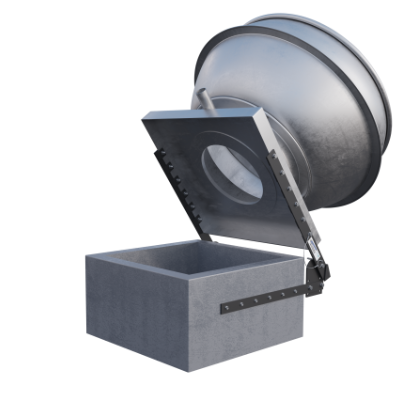
Kitchen exhaust cleaners will service the rooftop kitchen exhaust fan during the inspection and cleaning processes. Kitchen exhaust fans are required by NFPA 96 to be fitted with hinges that include a service hold open retainer on the device to lock the hinge open so that the fan may be safely cleaned and serviced. If a kitchen exhaust fan is not compliant it creates a safety hazard. Service personnel are at risk and the kitchen exhaust fan is susceptible to damage.

Hinges are necessary for the safety of kitchen exhaust cleaners. Those exhaust fans can weigh anywhere from fifty to a few hundred pounds. If there is no hinge kit, the fan must be manually lifted off the fan curb and placed on the rooftop. Imagine one or two people lifting a large, heavy, unyielding object like that fan under normal conditions; there is a real possibility of losing control of the fan and having it smash down on fingers, feet, or other body parts. Besides the injury the servicer endures, there is the insurance liability to consider. Eliminating that possibility is reason enough to get a high-quality hinge installed.

  1. Slip & Fall Hazards

Kitchen exhaust cleaners also must be on the lookout for slip-and-fall hazards, surprisingly enough, one of the highest risk areas is on a rooftop! The NFPA 96 states the following: (4) The ability to drain grease out of any traps or low point formed in the fan or duct near the termination of the system into a collection container that is noncombustible, closed, rainproof, and structurally sound for the service to which it is applied and that will not sustain combustion.

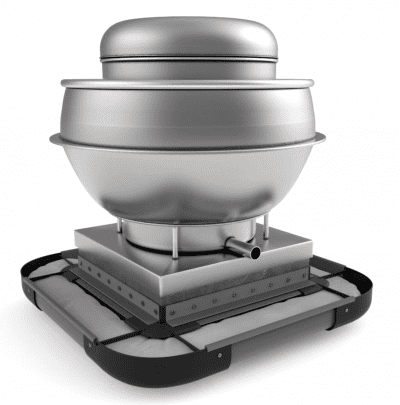
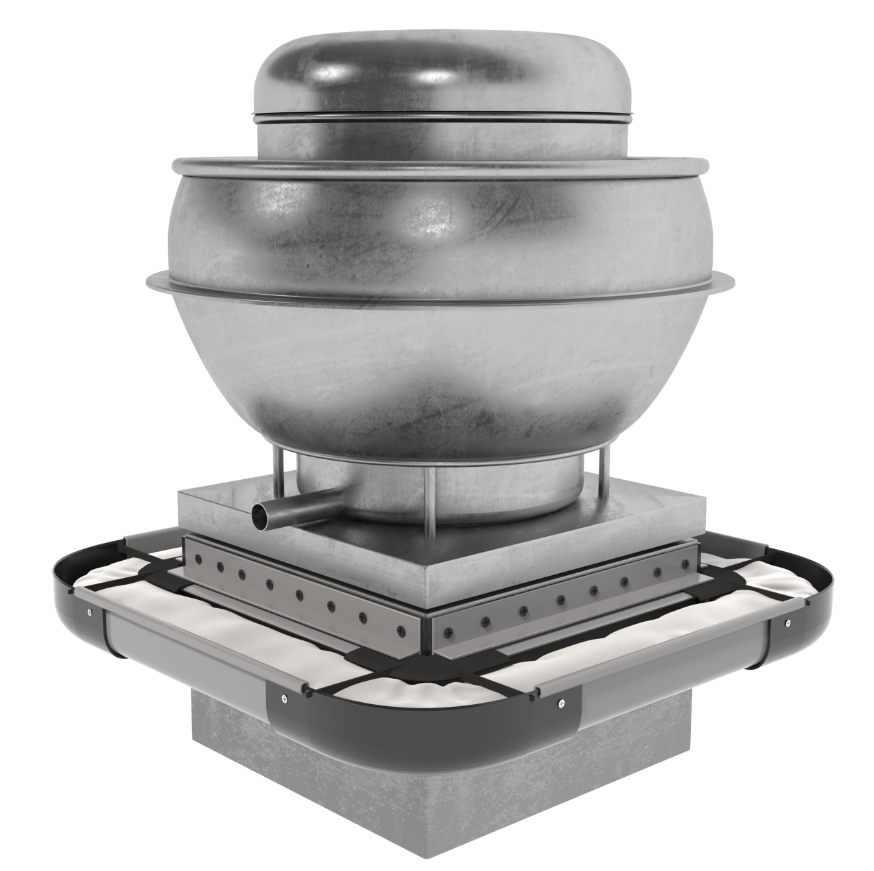
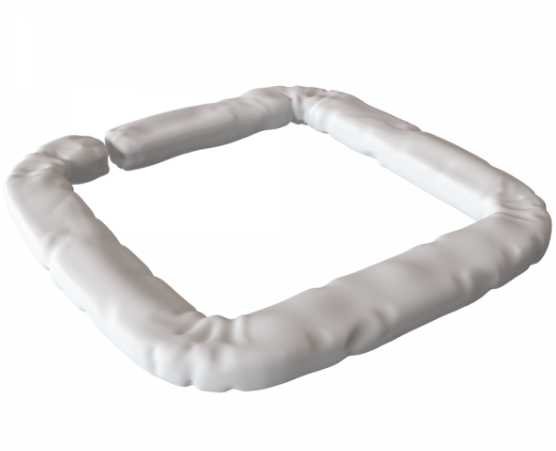
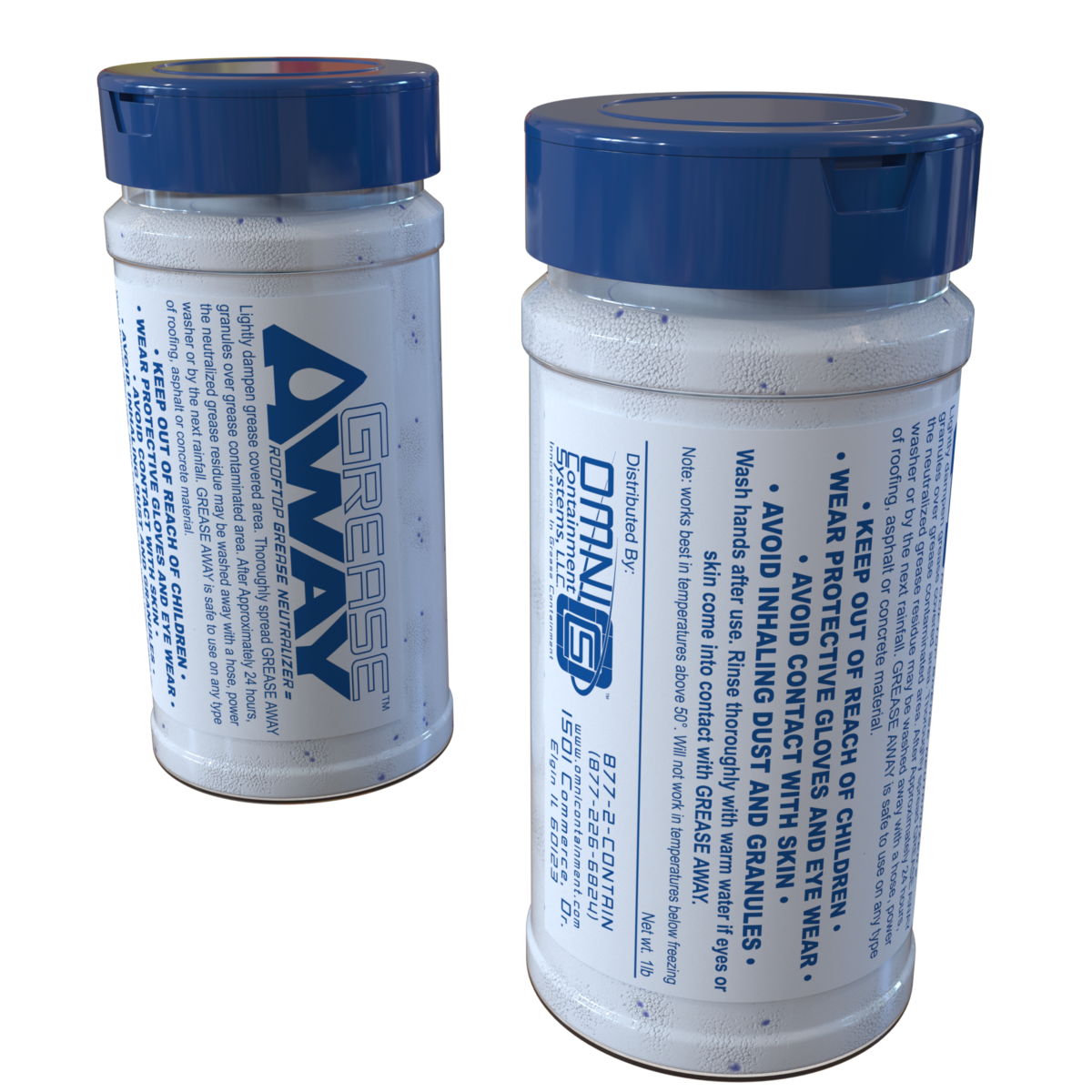
The NFPA requires a collection container or grease containment system. Most kitchen exhaust fans are equipped with a collection container, but these are often too small to handle the grease output. When a kitchen exhaust fan is not maintained to the NFPA 96 standard, grease begins to collect onto the rooftop. The mixture of grease and rainwater can cause a slick surface on the rooftop. In addition, this grease mixture can also erode the rooftop membrane and enter the storm drain, making the pavement and/or sidewalk dangerous for anyone walking over it.

Therefore, the NFPA 96 also states the following: (8.1.1.3) Upblast fans shall have a drain directed to a readily accessible and visible grease receptacle not to exceed 3.8 L (1 gallon).

  1. Accessibility to Kitchen Exhaust Ductwork

One of the biggest issues for kitchen exhaust cleaners is not having good access to the kitchen exhaust ducts. If a duct can’t be accessed easily, the duct will not be cleaned and will be noted as inaccessible in their inspection report. This is due to the safety hazards presented to the kitchen exhaust cleaner.  Kitchen exhaust ducts are situated high up from the ground and are difficult to reach. If a duct can’t be accessed , it not only becomes very difficult to clean, but is also considered an OSHA ladder safety risk for kitchen exhaust cleaners. Because of this issue, the NFPA states the following: “Openings shall be provided at the sides or at the top of the duct, whichever is more accessible, and at a change of direction.” It also states, “Openings large enough to permit thorough cleaning shall be provided at 3.7 m (12 ft) intervals.”- NFPA 96, 2017 Edition, 7.3.1.

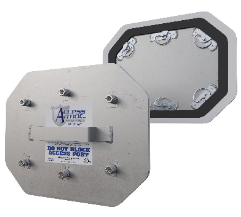
When selecting duct access doors, an important component to consider is ease of opening.  Kitchen exhaust cleaners often deal with access doors that require unscrewing wing nuts or other small parts. This could potentially cause small parts to slip out and fall down the ducts, making it inoperable. That is why the Omni line of access doors are entirely toolless. Our patented “Cam Lock” design require no wing nuts to juggle. Our Access Armor™duct access doors can be easily opened and closed by hand. They also are designed in an octagonal shape to eliminate sharp edges that could possibly injure personnel. They also provide eight-corner contact points instead of four which increases the rigidity of the door.

Even though there are many different aspects of safety to consider during a typical kitchen exhaust cleaning, the small steps of adding a hinge, having a grease containment system in place, and ensuring access doors are installed, can and will make a huge difference! Not only will these aspects keep your facility NFPA compliant, but they will also lessen some of the safety risks kitchen exhaust cleaners experience while performing their work!  If you have any questions regarding Omni Containment System’s products, contact us today.

Share This Blog Post!

grease containment for exhaust fans, rooftop grease solutions, commercial kitchen exhaust safety
19 January 2026
Leave buckets behind in 2026. Discover smarter rooftop grease containment systems, filters, and NFPA 96-compliant solutions from Omni Containment Systems.
Illustration: kitchen equipment overtaken by yellow, gloopy substance with flaming head, suggesting hazards.
10 December 2025
Finish the year strong with a rooftop kitchen exhaust system that’s safe, compliant, and winter-ready. Discover common issues to check, filter tips, and NFPA 96-compliant solutions from Omni.
Cartoon of a worker, next to a rooftop fan, reaching for a gooey alien inside the fan's housing.
12 November 2025
Ensure your rooftop exhaust fans are safe, serviceable, and fully NFPA 96 compliant. Learn why the right hinge matters and explore Omni’s durable, code-compliant hinge kits.
Yellow blob creature, flaming pumpkin, and grease-covered block warn about grease fire dangers in October.
30 October 2025
Protect your restaurant from costly grease fires. Learn key fire prevention tips, NFPA 96 compliance insights, and rooftop safety solutions from Omni Containment Systems.
An advertisement for fire safety.  Chimney and trash can on fire with fall foliage. Text:
by Admin 22 September 2025
This fall, safeguard your restaurant with NFPA 96-compliant fire safety upgrades. Omni Containment Systems offers Super Hinges, grease containment solutions, and VISIOMAX inspections to protect kitchens before the busy holiday season.
Man contemplating equipment choices: various colored machines. Text:
28 August 2025
Discover how the right equipment, like Tegras and Tecai systems from Omni Containment Systems, can boost efficiency, ensure safety, and drive business growth for kitchen exhaust cleaning professionals.
15 July 2025
In a commercial kitchen, the focus is often on what’s in plain sight: clean counters, properly functioning appliances, and seamless service. But hidden just above the kitchen line — in the ductwork of the exhaust system — are critical risks that can’t afford to be ignored. One of the most significant yet overlooked contributors to kitchen fires is poor duct access. Without proper access, routine cleaning becomes incomplete or impossible, allowing dangerous grease buildup to persist unchecked. These hazards can ignite in a flash, threatening lives, destroying property, and leading to costly downtime. In addition, failure to maintain accessible duct systems can violate fire codes and invalidate insurance coverage. If your kitchen exhaust system isn’t fully accessible, the consequences can be far more than just inconvenient — they can be catastrophic. Why Duct Access is a Fire Safety Essential Grease, fats, and oils naturally accumulate inside the ducts of every kitchen exhaust system. Over time, these residues form a flammable layer that can ignite if exposed to high heat or an errant spark. Restricted airflow from clogged or partially blocked ducts can also reduce the efficiency of your system, driving up energy use and maintenance needs. Recognizing these risks, the National Fire Protection Association (NFPA) established clear standards in NFPA 96, which requires access doors to be installed every 12 feet and at every duct turn. These doors provide critical entry points for cleaning crews to properly inspect and remove grease deposits. Without them, even the most skilled technicians can’t reach key areas — leaving behind fire hazards that remain out of sight and out of reach. A Smarter Solution: Omni’s Access Armor™ Meeting NFPA requirements is just the beginning. At Omni Containment Systems, we’ve designed our Access Armor™ doors to go beyond code — combining ease of use with exceptional fire resistance to keep kitchens safer and maintenance teams more efficient. Unlike traditional access doors that require tools or involve loose parts, Access Armor™ features a Cam-Lock mechanism that secures the door without extra hardware. This toolless design means faster access for maintenance and no risk of misplacing small pieces during cleanings. It’s a system built for the fast pace and high standards of modern commercial kitchens. The construction of Access Armor™ is just as impressive. These octagon-shaped doors are fire-rated up to 2,300°F, exceeding the NFPA 96 standard of 1,800°F, and they can withstand temperatures of up to 2,700°F. This enhanced durability is crucial not only for safety but also for minimizing long-term maintenance and reducing potential liability. Cleaning Plans That Reinforce Safety While access doors are foundational, a comprehensive cleaning and inspection plan is equally important. Grease buildup inside ducts should never exceed 0.002 inches (50 microns). Measuring this accurately — and consistently — helps you schedule cleaning before that threshold is crossed. Omni makes this easy with our stainless-steel grease comb , a simple but powerful tool that allows your team to check grease depth on the spot. This proactive approach ensures you're never left guessing whether it's time for professional cleaning. For most commercial kitchens, professional duct cleanings are recommended every six to twelve months, depending on cooking volume and equipment type. In addition, components like filters and containment tray pads should be inspected and replaced every three to six months to ensure optimal performance and containment of grease particles before they reach the ductwork. By combining hardware, monitoring tools, and a regular service cadence, you not only improve fire safety but also increase the efficiency and lifespan of your entire exhaust system. The Cost of Noncompliance — And the Power of Prevention Neglecting duct access doesn’t just increase fire risk — it can lead to code violations, fines, and higher insurance premiums. In some cases, an insurance claim following a fire may be denied if the system was found to be noncompliant or improperly maintained. Investing in the right equipment and practices today can prevent costly consequences tomorrow. Omni Containment Systems offers a full suite of solutions designed to make compliance easy and intuitive. Our products are built to exceed industry standards, giving your team the tools they need to perform safe, thorough maintenance on schedule. Bringing the Hidden Risks Into View In the world of kitchen safety, what you don’t see can hurt you. Poor duct access allows grease to build silently, turning your exhaust system into a ticking time bomb. But with the right access doors, cleaning tools, and maintenance strategy, you can eliminate those risks before they become real threats. Omni Containment Systems provides everything you need to take control of your kitchen exhaust safety. With Access Armor™, grease monitoring tools, and expert guidance, you can ensure that your ducts are clean, your kitchen is compliant, and your business is protected — from the inside out. Ready to take the first step toward safer ducts and fewer fire hazards? Contact us today to learn more about our products and compliance solutions.
A cartoon of a rooftop fan with the words
19 June 2025
In our ongoing case study series, we’ve learned that when it comes to rooftop fan installations, there’s one crucial standard that can’t be ignored: the 60% rule. At Omni Containment Systems, we’ve seen firsthand how using a hinge that spans at least 60% of a fan base can be the difference between a safe, long-lasting installation and a dangerous, costly failure. In this month’s blog, we’re sharing two incidents—the “Damaged Fan Base” and the “Micro-Hinge”—that highlight just how important it is to follow this simple but critical guideline. Read on to see how these real-world examples underscore the importance of the 60% rule—and how following it can protect your rooftop equipment and the people who work on it. Let’s dive in.
A cartoon illustration of a kitchen exhaust cleaner
19 May 2025
In the bustling world of commercial kitchens, safety, compliance, and cleanliness are non-negotiable. Behind the scenes, one group of professionals is critical to maintaining these standards but often goes unrecognized—kitchen exhaust cleaners. At Omni Containment Systems , we understand and deeply value the essential work these specialists do. That’s why our products are purposefully designed not only to meet stringent regulations like NFPA 96 and EPA standards, but also to enhance the efficiency and safety of the professionals responsible for implementing them.
A cartoon drawing of the earth with the words grease containment an earth day essential
21 April 2025
This Earth Day, Omni Containment Systems highlight a critical yet often overlooked aspect of environmental protection — preventing grease pollution through effective containment solutions.
More posts