Using TEGRAS as A Tool for Kitchen Exhaust Cleaning  Part 2: Kitchen Exhaust Ducts

Using TEGRAS as A Tool for Kitchen Exhaust Cleaning Part 2: Kitchen Exhaust Ducts

It is the least talked about part of a kitchen exhaust system, yet it is probably the most notorious spot for many kitchen exhaust cleaners! Just gaining access to this exclusive area can make some kitchen exhaust cleaners turn and walk away. This essential area of the kitchen exhaust system is the exhaust system’s ductwork. The kitchen exhaust ducts connect from the kitchen exhaust hood to transfer air to the termination point, the kitchen exhaust fan. Even though the kitchen exhaust hood or canopy takes the brunt of the high heat and grease, the kitchen exhaust ducts also accumulate grease laden vapors. That is why the NFPA 96 fire code addresses the kitchen exhaust system’s ductwork in detail.

Kitchen exhaust cleaners are tasked with cleaning a restaurant’s kitchen exhaust system from the hood up to the rooftop kitchen exhaust fan. All the grease laden surfaces must be cleaned down to bare metal. Failing to keep the kitchen exhaust system clean will compromise its ability to do its job. Once too much grease builds up, the risk of dangerous flash fires can occur within the kitchen exhaust ductwork. For kitchen exhaust cleaners to clean the ductwork they must rely heavily on gaining access to a long maze of connecting ductwork. In some restaurant environments, this involves complex systems with hundreds of feet of lateral ductwork. These types of jobs require a lot of technicians, multiple ladders setups, and chemical applications.

The Standard Practice

Every night kitchen exhaust cleaning crews set out across the country with the mission to keep restaurants safe from the risk of fire. The standard practice of cleaning the kitchen exhaust ductwork is labor intensive and should be performed at the highest quality for a thorough, fire code compliant cleaning. As with the hood canopy, this involves a standard power washing truck or van equipped with a hot water pressure system.

These cleaning services include scraping the ducts to remove grease deposits from the accessible areas. The build-up of fats, oils, and grease in kitchen exhaust systems ductwork can be heavily grease ladened. The use of high-quality chemicals is required to remove the grease. This combination is repeated for each access point in the ductwork. Scrape, chemical, rinse, repeat.  Depending on the type of chemical utlized this could involve mulitiple reapplications, climbing onto equipment, ladders, and multiple moves. In addition, there are different pressure washing tips that can be attached to help get into difficult angles and tight nooks and bends in the ductwork. In the event that a particular area of the ductwork is inaccessible, an access panel must be installed, or noted as inaccessible in the kitchen exhaust cleaners report.

The TEGRAS Method

Active Foam

Each restaurant produces grease that is directly connected to what they are cooking which can affect the effectiveness of removing grease laden vapors within the kitchen exhaust ductwork. As with the standard method, application of the chemical is fundamental to the entire process. TEGRAS owners have found that the COMEGRAS chemical makes a notable difference!

Many kitchen exhaust cleaners have run into troublesome grease at some point in their career that required finding the right mixture of chemicals. With COMEGRAS, that is an issue no more. COMEGRAS is extremely effective on all types of grease, and unlike many chemicals because it is formulated to create a heavy duty active foam. When the active foam is applied it clings to the walls of the ductwork. Dwell time is key and depending on the severity of the buildup, reapplication may be required. The active foam will go from white to orange in color as it breaks down the grease. The heavy duty foam will cling and pull the grease down from surfaces.

Application of Chemical

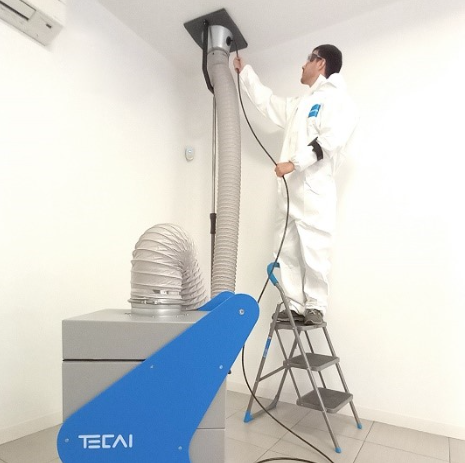
The application of chemical in kitchen exhaust ductwork can be tricky for kitchen exhaust cleaners. It relies heavily on access points in the kitchen exhaust ductwork and spraying the chemical onto the duct surfaces. With the TEGRAS equipment, you can reach areas that scrapers and powerwashers cannot! The TEGRAS concept utilizes duct brushing robots to apply the chemical! This automates the procedure of applying chemical onto the duct surfaces with four different models to choose from:

MULTIPRO

The MULTIPRO is the most technologically advanced robot in the TEGRAS line. Unlike other models, the MULTIPRO lets you integrate a video-inspection system for exhaust ductwork views. It is a self-leveling camera system that provides upright images even when the camera is tilted; now you can inspect and clean at the same time! The MULTIPRO also offers the choice of working remotely through use of a wrist remote control. The most advanced pneumatic robotic design integrates a foam system to distribute the COMEGRAS foam throughout the ductwork. There is no need for additional equipment! This is a powerful machine designed to restore the toughest kitchen exhaust systems down to the bare metal!

FORTE

The FORTE is also a pneumatic duct brushing robot, this machine connects with an active foam generator to distribute the COMEGRAS foam throughout the ductwork. When connected, it projects a dense foam that adheres to the inside of walls dissolving grease. Like the MULTIPRO, it features 98-feet of semi-rigid hose to work vertically, horizontally, and make 90-degree bends.

IBRUSH

The IBRUSH is a small electric portable duct brushing robot. This machine requires connection with the IFOAM active foam generator, which adheres to the walls of the ducts. Its compact size makes it ideal for accessing ductwork with limited access! It is agile enough to make 8-15 foot runs with its 25-foot hose length.

EON

The EON is an electric rotary brushing tool. This machine also requires connection with the IFOAM active foam generator to distribute the COMEGRAS homogeneneously inside the duct. It is the ideal equipment for the cleaning of medium-sized exhaust ducts.

Rinsing the Duct System

That standard method of cleaning involves the use of a powerwash truck or van located outside a facility. KEC’s will then feed the hose to access point of the ductwork to hot pressure wash the inside of the duct surfaces. With the TEGRAS method, the duct brushing robots will polish and rinse the ducts for a perfect shine. The brushes are an essential element between the brushing robot and duct cleaning. For square duct cleaning a combination of two brushes are required and you only have to measure the height of the duct to know the correct size of brush to utilize.

Conclusion

Upgrading or purchasing the right equipment can be instrumental in helping your KEC company tackle these tough jobs. It is common for businesses to get to a point where they have plateaued and need to invest in their business for it to grow and become more profitable. With the TEGRAS line of equipment, you can elevate your business. As a kitchen exhaust cleaner, you want to ensure that not only are your clients happy, but their spaces are free of all grease. The easier that job is on you and your employees, the better. Once you obtain your own set of TEGRAS equipment, you will have the peace of mind of knowing that you will save your business both time and money.

Share This Blog Post!

23 April 2026
When people think about environmental responsibility in commercial kitchens, they usually focus on what goes down the drain. But one of the most overlooked sources of pollution isn’t inside your facility, it’s on your roof. Rooftop grease runoff from kitchen exhaust systems can have a direct and damaging impact on local water systems, storm drains, and surrounding ecosystems. Without proper containment , that grease doesn’t just disappear, it travels. From Rooftop to Waterway: How Grease Becomes Pollution Commercial kitchen exhaust systems are designed to remove heat, smoke, and airborne grease particles. While hood filters capture some of that grease, a significant amount still passes through the system and accumulates in ductwork and exhaust fans. Over time, this buildup begins to drip onto the roof, spread across roofing materials, and get carried away by rainwater. Once rain hits your roof, it acts as a transport system, moving grease into gutters, downspouts, and ultimately into storm drains. Unlike sanitary sewer systems, stormwater runoff is often discharged directly into local waterways without treatment. As a result, grease from your rooftop can end up in rivers, lakes, municipal stormwater systems, and surrounding soil. Why It Matters: Environmental and Operational Risks The impact of rooftop grease runoff extends beyond a messy roof; it creates real environmental and operational concerns. Grease contains fats, oils, and contaminants that can degrade water quality. When introduced into natural water systems, it can harm aquatic life, disrupt oxygen levels, and contribute to long-term ecosystem damage. At the same time, regulatory compliance is at risk. Local and federal requirements , often tied to EPA stormwater guidelines, mandate that facilities prevent pollutants from entering storm drains. Uncontrolled grease runoff can lead to fines, failed inspections, and increased scrutiny.  There are also direct impacts on your facility. Grease buildup can deteriorate roofing materials, void warranties, and create slip hazards for maintenance personnel. What begins as a rooftop issue can quickly escalate into a costly problem. The Role of Grease Containment Systems A properly designed grease containment system serves as a critical barrier between your exhaust system and the environment. Instead of allowing grease to spread across the roof, these systems capture it at the source, right at the exhaust fan's discharge. Filtration media absorbs and holds the grease, preventing runoff during rain events and reducing the risk of environmental contamination. More advanced systems incorporate multi-stage filtration, improving efficiency while reducing maintenance frequency. The result is a cleaner, safer, and more controlled rooftop environment. Sustainability Starts at the Source Environmental responsibility isn’t just about compliance; it’s about prevention . By addressing grease at the rooftop level, facilities can reduce their environmental footprint, support local water quality initiatives, and align with broader sustainability. For multi-site operators and property managers, this becomes even more important. A single poorly managed rooftop can impact not just one building, but an entire property, or even the surrounding community. Best Practices for Preventing Rooftop Grease Runoff Preventing grease runoff doesn’t require a complete overhaul, but it does require consistency and the right approach . Start by installing a high-quality grease containment system designed for durability and ease of maintenance. From there, regular maintenance is key. Filtration media should be inspected and replaced as needed to ensure the system continues performing effectively. Routine rooftop inspections can help identify buildup early, before it becomes a larger issue. Finally, working with experienced professionals ensures proper system selection and installation, setting up the foundation for long-term performance. A Small Change with a Big Impact Grease containment may seem like a small part of your operation, but its impact extends far beyond your rooftop. By taking proactive steps to manage grease runoff, you’re not only protecting your building, but you’re also helping protect your local environment and water systems. Looking to improve your rooftop grease management? Omni Containment Systems provides innovative solutions designed to keep grease where it belongs, off your roof and out of waterways.
by technical 25 March 2026
Proper duct access improves safety and cleaning efficiency in kitchen exhaust systems. Learn why Access Armor doors help technicians work safe and stay NFPA compliant.
common duct cleaning mistakes, duct cleaning best practices, ventilation system cleaning errors
by technical 21 February 2026
Discover the most common duct cleaning mistakes that reduce air quality and HVAC efficiency. Learn how to improve protocols, avoid costly errors, and choose the right equipment.
grease containment for exhaust fans, rooftop grease solutions, commercial kitchen exhaust safety
by technical 19 January 2026
Leave buckets behind in 2026. Discover smarter rooftop grease containment systems, filters, and NFPA 96-compliant solutions from Omni Containment Systems.
Illustration: kitchen equipment overtaken by yellow, gloopy substance with flaming head, suggesting hazards.
by technical 10 December 2025
Finish the year strong with a rooftop kitchen exhaust system that’s safe, compliant, and winter-ready. Discover common issues to check, filter tips, and NFPA 96-compliant solutions from Omni.
Cartoon of a worker, next to a rooftop fan, reaching for a gooey alien inside the fan's housing.
by technical 12 November 2025
Ensure your rooftop exhaust fans are safe, serviceable, and fully NFPA 96 compliant. Learn why the right hinge matters and explore Omni’s durable, code-compliant hinge kits.
Yellow blob creature, flaming pumpkin, and grease-covered block warn about grease fire dangers in October.
by technical 30 October 2025
Protect your restaurant from costly grease fires. Learn key fire prevention tips, NFPA 96 compliance insights, and rooftop safety solutions from Omni Containment Systems.
An advertisement for fire safety.  Chimney and trash can on fire with fall foliage. Text:
by Admin 22 September 2025
This fall, safeguard your restaurant with NFPA 96-compliant fire safety upgrades. Omni Containment Systems offers Super Hinges, grease containment solutions, and VISIOMAX inspections to protect kitchens before the busy holiday season.
Man contemplating equipment choices: various colored machines. Text:
by technical 28 August 2025
Discover how the right equipment, like Tegras and Tecai systems from Omni Containment Systems, can boost efficiency, ensure safety, and drive business growth for kitchen exhaust cleaning professionals.
by technical 15 July 2025
In a commercial kitchen, the focus is often on what’s in plain sight: clean counters, properly functioning appliances, and seamless service. But hidden just above the kitchen line — in the ductwork of the exhaust system — are critical risks that can’t afford to be ignored. One of the most significant yet overlooked contributors to kitchen fires is poor duct access. Without proper access, routine cleaning becomes incomplete or impossible, allowing dangerous grease buildup to persist unchecked. These hazards can ignite in a flash, threatening lives, destroying property, and leading to costly downtime. In addition, failure to maintain accessible duct systems can violate fire codes and invalidate insurance coverage. If your kitchen exhaust system isn’t fully accessible, the consequences can be far more than just inconvenient — they can be catastrophic. Why Duct Access is a Fire Safety Essential Grease, fats, and oils naturally accumulate inside the ducts of every kitchen exhaust system. Over time, these residues form a flammable layer that can ignite if exposed to high heat or an errant spark. Restricted airflow from clogged or partially blocked ducts can also reduce the efficiency of your system, driving up energy use and maintenance needs. Recognizing these risks, the National Fire Protection Association (NFPA) established clear standards in NFPA 96, which requires access doors to be installed every 12 feet and at every duct turn. These doors provide critical entry points for cleaning crews to properly inspect and remove grease deposits. Without them, even the most skilled technicians can’t reach key areas — leaving behind fire hazards that remain out of sight and out of reach. A Smarter Solution: Omni’s Access Armor™ Meeting NFPA requirements is just the beginning. At Omni Containment Systems, we’ve designed our Access Armor™ doors to go beyond code — combining ease of use with exceptional fire resistance to keep kitchens safer and maintenance teams more efficient. Unlike traditional access doors that require tools or involve loose parts, Access Armor™ features a Cam-Lock mechanism that secures the door without extra hardware. This toolless design means faster access for maintenance and no risk of misplacing small pieces during cleanings. It’s a system built for the fast pace and high standards of modern commercial kitchens. The construction of Access Armor™ is just as impressive. These octagon-shaped doors are fire-rated up to 2,300°F, exceeding the NFPA 96 standard of 1,800°F, and they can withstand temperatures of up to 2,700°F. This enhanced durability is crucial not only for safety but also for minimizing long-term maintenance and reducing potential liability. Cleaning Plans That Reinforce Safety While access doors are foundational, a comprehensive cleaning and inspection plan is equally important. Grease buildup inside ducts should never exceed 0.002 inches (50 microns). Measuring this accurately — and consistently — helps you schedule cleaning before that threshold is crossed. Omni makes this easy with our stainless-steel grease comb , a simple but powerful tool that allows your team to check grease depth on the spot. This proactive approach ensures you're never left guessing whether it's time for professional cleaning. For most commercial kitchens, professional duct cleanings are recommended every six to twelve months, depending on cooking volume and equipment type. In addition, components like filters and containment tray pads should be inspected and replaced every three to six months to ensure optimal performance and containment of grease particles before they reach the ductwork. By combining hardware, monitoring tools, and a regular service cadence, you not only improve fire safety but also increase the efficiency and lifespan of your entire exhaust system. The Cost of Noncompliance — And the Power of Prevention Neglecting duct access doesn’t just increase fire risk — it can lead to code violations, fines, and higher insurance premiums. In some cases, an insurance claim following a fire may be denied if the system was found to be noncompliant or improperly maintained. Investing in the right equipment and practices today can prevent costly consequences tomorrow. Omni Containment Systems offers a full suite of solutions designed to make compliance easy and intuitive. Our products are built to exceed industry standards, giving your team the tools they need to perform safe, thorough maintenance on schedule. Bringing the Hidden Risks Into View In the world of kitchen safety, what you don’t see can hurt you. Poor duct access allows grease to build silently, turning your exhaust system into a ticking time bomb. But with the right access doors, cleaning tools, and maintenance strategy, you can eliminate those risks before they become real threats. Omni Containment Systems provides everything you need to take control of your kitchen exhaust safety. With Access Armor™, grease monitoring tools, and expert guidance, you can ensure that your ducts are clean, your kitchen is compliant, and your business is protected — from the inside out. Ready to take the first step toward safer ducts and fewer fire hazards? Contact us today to learn more about our products and compliance solutions.
More posts